Garden Tools
How to Repair Garden Hose Fast with Durable Brass Fittings
Learn how to repair garden hose leaks with easy DIY steps using durable hose mender kits and quality brass fittings for lasting fixes.
Read More
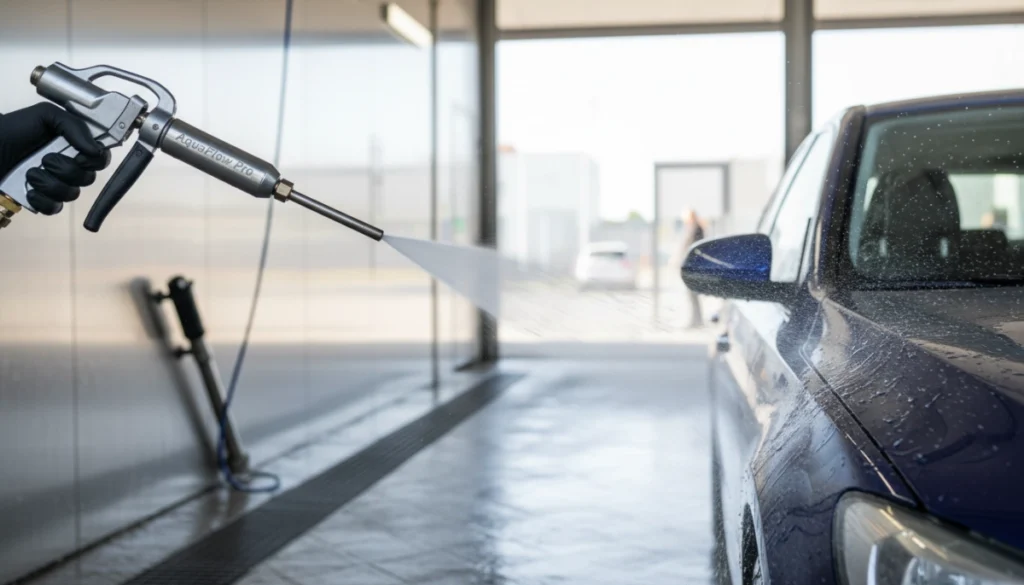
When sourcing or manufacturing a Car wash spray gun, the first variable we analyze is the power source. There is a massive engineering difference between a tool designed for a municipal water tap and one built for an industrial pressure pump. As a factory-direct supplier, we see buyers frequently confuse these applications. Understanding the physics of flow is the only way to ensure the tool matches the task.
To build industrial-grade equipment that lasts, we have to balance two critical forces. It’s not just about power; it’s about efficiency.
For professional detailers and heavy-duty applications, a standard sprayer won’t cut it. We manufacture High-pressure washer guns capable of handling up to 4000 PSI. These are designed to work exclusively with a pressure washer pump. They are the ideal choice for:
Not every wash requires a compressor. Our Garden hose spray guns are engineered to maximize standard municipal water pressure (typically 40–60 PSI). These Garden hose attachment models are built with upgraded internal seals to prevent leaks even at lower pressures. They are best for:
A Detailing wash gun is useless if it doesn’t fit the water source. High-pressure guns typically utilize Quick connect fittings (1/4 inch) or M22 threaded connections, which require a pressure washer hose. Conversely, low-pressure guns use standard 3/4″ garden threads (GHT). We strictly separate these manufacturing lines to ensure safety and performance. You cannot attach a high-pressure gun directly to a garden hose without a pump—the internal valve resistance is simply too high for municipal pressure to overcome.
As a manufacturer, I know that the difference between a disposable toy and a professional tool lies beneath the casing. When sourcing a car wash spray gun, the internal components dictate longevity and performance. We don’t cut corners with cheap plastic internals that crack under the stress of a high-pressure washer gun; instead, we prioritize industrial-grade durability.
For a heavy-duty wash pistol, weight is usually a sign of quality. We rely on solid brass and stainless steel for critical core components. Unlike generic plastic valves that wear down after a few uses, metal internals withstand the constant on-off cycling required during detailing. This ensures the tool remains a reliable brass replacement gun for years, not just a season.
A leak-free pressure washer gun depends entirely on its seals. We utilize NBR (Nitrile Butadiene Rubber) and TPE materials for our O-rings and gaskets. These materials offer superior resistance to:
When pairing a high-end gun with a durable PVC garden hose for car washing, these premium seals ensure the connection point remains watertight, preventing the dreaded “wet sleeve” syndrome.
Global markets demand tools that work in any climate. Our materials feature anti-freeze and cold-proof properties, ensuring the gun housing won’t shatter if left in a freezing garage. Beyond durability, we focus on user-centric design. An industrial cleaning sprayer must be comfortable. We engineer easy-pull triggers and ergonomic grips to significantly reduce hand fatigue, allowing detailers to work longer with better control.
Understanding the difference between a car wash foam blaster (often called a foam gun) and a high-pressure foam cannon is critical for sourcing the right inventory. A foam gun typically attaches to a standard garden hose, relying on municipal water pressure (around 40-60 PSI) to mix soap and water. While convenient, the suds are usually wetter and run off quickly. In contrast, a snow foam lance connects to a pressure washer, utilizing the high velocity to force air into the mixture. This aeration process is what creates the thick, shaving-cream-like foam that clings to vertical surfaces, allowing the chemicals to break down dirt before a wash mitt ever touches the paint.
Creating that signature thick foam isn’t magic; it’s engineering. Inside a quality high-pressure foam cannon, water is forced through a small orifice and mixed with soap, then pushed through a stainless steel mesh filter (the agitator). This turbulence aerates the solution.
Professional detailing requires adaptability. Our units feature top-mounted adjustable knobs that let users master the dilution ratio. Turning the knob adjusts how much soap is drawn from the reservoir versus how much fresh water passes through. This allows for a heavy, rich blanket for dirty SUVs or a thinner solution for a quick maintenance wash.
Equally important is the adjustable nozzle sprayer on the front. By twisting the barrel, users can switch the variable spray pattern instantly:
Consistent foam thickness is a direct indicator of manufacturing precision. If a car wash spray gun produces sputtering or watery foam, it often signals poor internal machining or a low-quality aeration mesh. To maintain that steady flow and pressure required for perfect foam generation, we recommend pairing your equipment with a durable reinforced PVC hose. A hose that resists kinking ensures the pressure washer receives a constant water supply, allowing the cannon to operate at peak performance without fluctuation.
A high-performance car wash spray gun is only as good as its connection to the water source. If the fittings don’t match perfectly, you lose pressure and end up with messy leaks. As a manufacturer serving global markets, we engineer our tools to accommodate the two primary connection standards used by detailers and industrial cleaners worldwide.
Choosing between speed and security depends on how the equipment is used.
Fighting a tangled hose is the biggest frustration in car washing. We integrate swivel connectors at the gun inlet to solve this. A live swivel allows the gun to rotate 360 degrees independently of the hose line. This prevents kinks and reduces wrist fatigue, ensuring the leak-free pressure washer gun moves with you, not against you. Pairing a swivel gun with a flexible black copper plated car wash water hose maximizes maneuverability around the vehicle.
Different regions rely on different thread standards (like NPT vs. BSP). In our OEM/ODM production, we customize the inlet specifications to match the local infrastructure of your target market. Whether you need a standard garden hose attachment or a high-pressure industrial coupling, we machine our brass and stainless steel fittings to ensure universal compatibility and a watertight seal every time.
When stocking inventory, reliability is the only metric that truly counts. We adhere strictly to ISO9001 quality management standards because consistent manufacturing prevents the defects that kill profit margins. Unlike generic third-party sourcing where quality can fluctuate between batches, our factory-direct Quality Control (QC) ensures every car wash spray gun meets rigorous industrial-grade standards before it ships.
For global wholesalers, off-the-shelf solutions often miss the mark. We specialize in OEM irrigation tools, allowing you to fully customize the product to fit your brand identity. Our customization capabilities include:
Whether you are developing a standalone industrial cleaning sprayer or a complete wash kit paired with a white PVC garden hose for car washing, we tailor the specifications to ensure seamless compatibility and durability. By controlling the entire production process, we help you deliver a product that builds trust with your end-users.
As a manufacturer, we know that even the most robust car wash spray gun requires care to maintain peak performance. Industrial-grade tools are built for durability, but a few simple habits can significantly extend their service life and prevent downtime.
Soap residue is the silent killer of pressure equipment. When chemical detergents dry inside the manifold, they create blockages that restrict flow and damage internal valves. After every wash session, especially when using a T8 household long pole water gun with foam pot, it is critical to detach the soap reservoir and run clear water through the system. flushing the industrial cleaning sprayer for just 30 seconds clears out corrosive salts and surfactants, ensuring the tool is ready for the next job.
Water expands when it freezes, which can crack even reinforced casings. While our equipment often features anti-freeze and cold-proof properties, proper storage is non-negotiable during winter.
A leak-free pressure washer gun relies on the integrity of its seals. Over time, friction and high-pressure spikes can flatten rubber gaskets. We utilize high-quality NBR (Nitrile Rubber) in our manufacturing to resist wear, but O-rings remain consumable parts.
The main difference lies in the power source and the foam density. A car wash foam blaster (foam gun) connects directly to a standard garden hose attachment. It relies on municipal water pressure to mix soap and water, creating a wet, sudsy mixture. In contrast, a high-pressure foam cannon attaches to a pressure washer. The high PSI generates a thick, shaving-cream-like “snow foam” that clings to the vehicle for a deeper clean. For casual washing, a foam gun is sufficient, but for professional detailing, the cannon is the superior choice.
If you are referring to a trigger gun designed for a pressure washer (rated for 3000+ PSI), the answer is no. These require a pump to function and use specific quick connect fittings or M22 threads that do not mate with standard garden hoses. However, we manufacture specific high-performance nozzles designed for direct hose connection. For example, our thickened rod multifunctional car washing water gun is engineered to maximize the output of a standard water line, giving you a strong stream without needing an external machine.
Leaks usually stem from worn washers or loose connections. First, check the O-ring inside your swivel connector or coupling; if it is flattened or cracked, it needs replacing. We use industrial-grade NBR (Nitrile Rubber) seals in our tools to resist wear, but maintenance is still necessary. Ensure your fittings are screwed on tightly and that you are using the correct thread type (e.g., matching NPT to NPT). Using a leak-free pressure washer gun setup often just requires a fresh O-ring and some thread seal tape.
More pressure isn’t always better. For vehicle paint, the sweet spot is typically between 1200 and 1900 PSI. This provides enough force to blast away mud and road grime without stripping wax or damaging the clear coat. Using a variable spray pattern or a wider nozzle tip (like 40 degrees) helps disperse the force. A durable tool like the gray rubber-coated high-pressure car wash water gun offers excellent handling and flow control, allowing you to wash safely and effectively.
Learn how to repair garden hose leaks with easy DIY steps using durable hose mender kits and quality brass fittings for lasting fixes.
Read More
🚀 Upgrade Your Watering Game with the best garden hose nozzle! Tired of nozzles that leak, are hard to use, or confusing? A good garden hose nozzle can make watering easier—saving you time, water, and hassle. After testing 38 nozzles, some over 6 months of daily use, we’ve picked the top 8 nozzles to fit all […]
Read More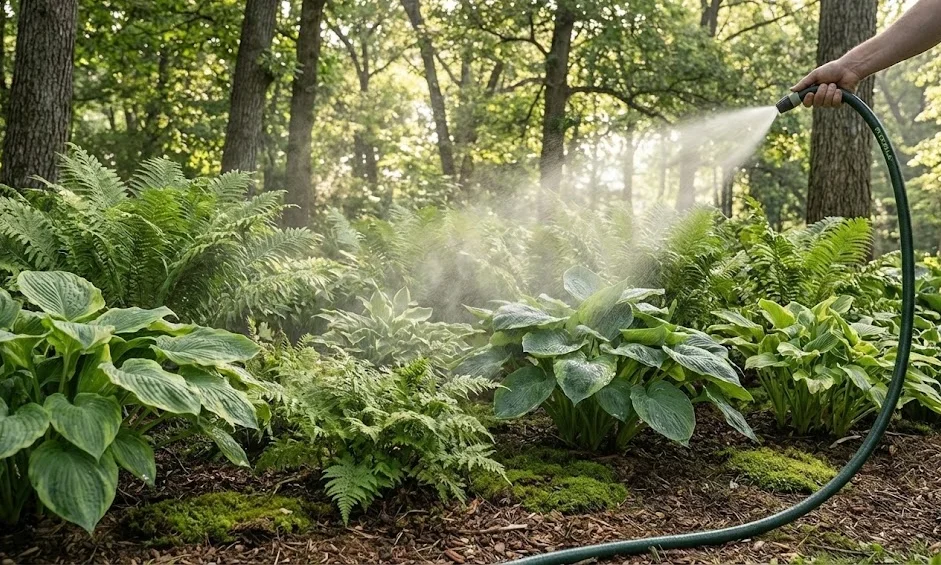
Table of Contents If you grow seedlings, ferns, shade-loving perennials, or tender foliage plants, the best garden hoses for sensitive plants are the ones that deliver soft, low-pressure water instead of harsh, damaging jets. The right hose and nozzle combination can prevent soil from splashing, protect delicate leaves, and keep root zones evenly moist without […]
Read More