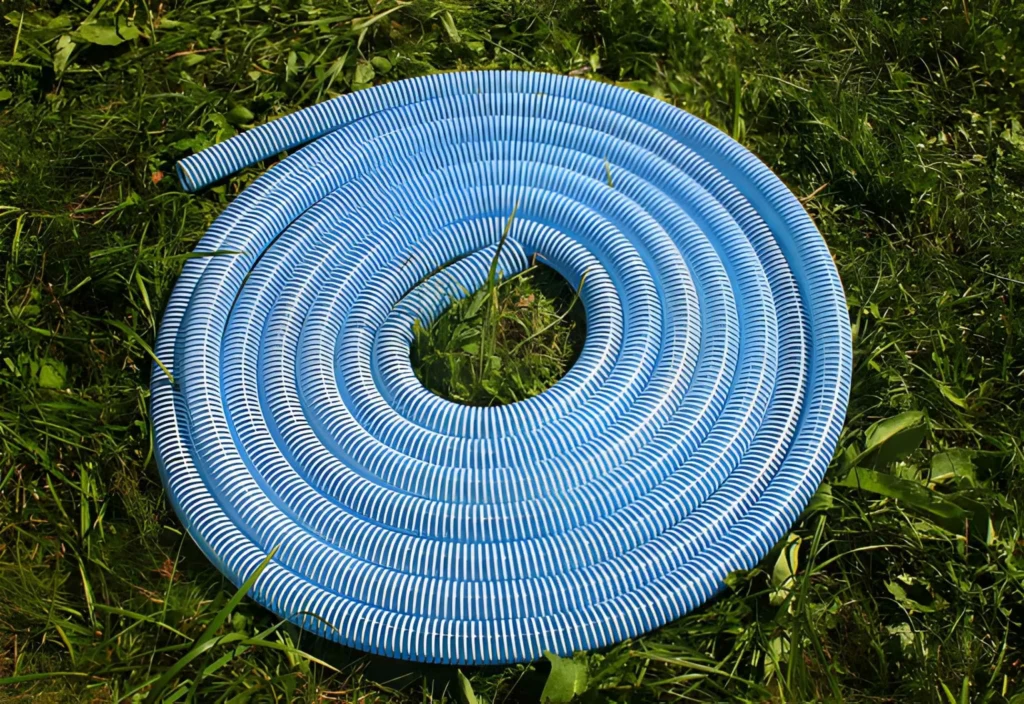
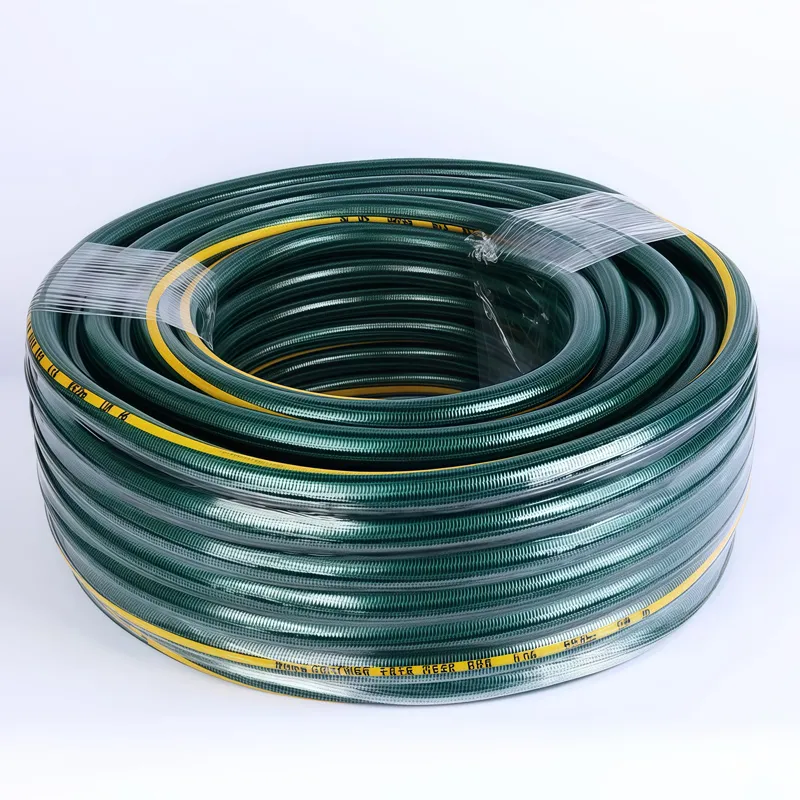
If you have ever walked across your yard only to find your water flow suddenly cut off, you already know why an anti-kink hose matters. A kinked hose interrupts watering, strains fittings, and over time can damage the hose wall so badly that leaks and bulges appear. Upgrading to an anti-kink hose, such as a reinforced PVC garden high elastic hose, can turn that constant fight with sharp bends into a smooth, predictable watering routine. Within the first few uses, most people notice that a flexible anti-kink hose simply glides around corners instead of folding over on itself.
At a basic level, an anti-kink hose is designed to resist collapsing when it bends. Traditional hoses, especially older or cheap PVC models, tend to develop “memory” from being tightly coiled and stored. When you pull them straight, those tight loops become hard angles that cut off water flow. An anti-kink hose uses better materials and internal reinforcement so it can bend without flattening, even when you drag it around trees, planters, or patio furniture. The result is less frustration, less wasted time, and a hose that stays useful for more seasons.
A good anti-kink hose also protects your fittings and accessories. Kinks create sudden pressure spikes when they release, which can strain connectors, nozzles, and spray guns. By keeping the water path open and consistent, an anti-kink hose works together with your nozzles and sprinklers instead of fighting against them.
How to Fix a Kinked Hose Before Upgrading to an Anti-Kink Hose
Even if you plan to buy an anti-kink hose soon, it still helps to know how to fix a kinked hose properly. The worst thing you can do is stand at the nozzle end and yank as hard as possible. Pulling aggressively tightens the fold, grinds the hose against rough surfaces, and can permanently weaken that section of tubing. Instead, walk back along the hose until you find where the water flow stops and visually locate the kink.
Once you find it, use both hands to gently bend the hose in the opposite direction of the fold, smoothing the flattened section instead of twisting it violently. For stubborn spots, temporarily shut off the water, drain the hose, and stretch it out in a straight line along your driveway or lawn. Warm sunlight helps soften the material so you can “massage” the hose back into a round shape. This simple kinked hose repair technique often restores a decent portion of flexibility, especially on newer hoses.
If the same area keeps kinking, inspect it closely for damage. Look for whitening of the plastic, small cracks, or bulges that appear under pressure. These are signs that the hose wall has been overstressed and may fail. In that case, cut out the damaged section with a clean, straight cut and reconnect the two good ends using a hose repair connector sized to your hose diameter. This is a quick way to extend the life of an older hose while you plan your transition to a modern anti-kink hose.
Installation and Storage to Keep Your Anti-Kink Hose Kink-Free
Even the best anti-kink hose can develop problems if installed or stored badly. One of the most important steps is how you connect it to the spigot. Make sure the faucet connection is straight and not forced to bend sharply downward or sideways. Using a short leader hose or a 90-degree connector can protect the first section of your anti-kink hose from constant stress and premature wear.
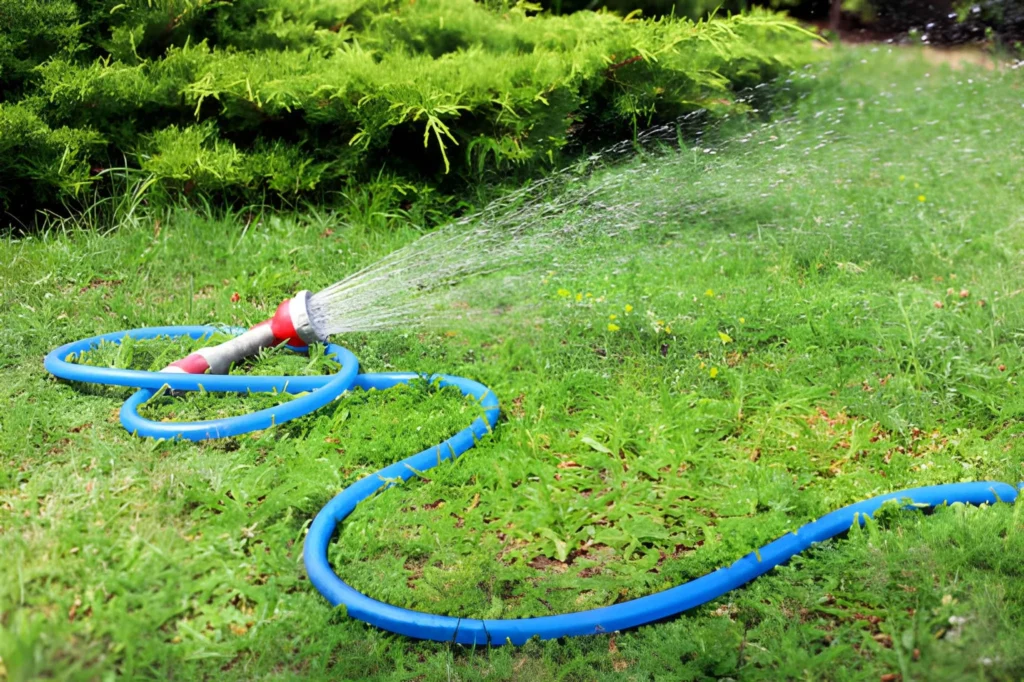
When you lay out your hose for use, pull it off the reel or rack gradually so it can rotate and untwist. Letting an anti-kink hose spin naturally as you extend it reduces the internal torsion that often causes loops and tangles. Avoid dragging the hose tightly around sharp edges like step corners, brick walls, or metal furniture legs. Gentle curves are where an anti-kink hose shines; hard, angled turns are where even good hoses can struggle.
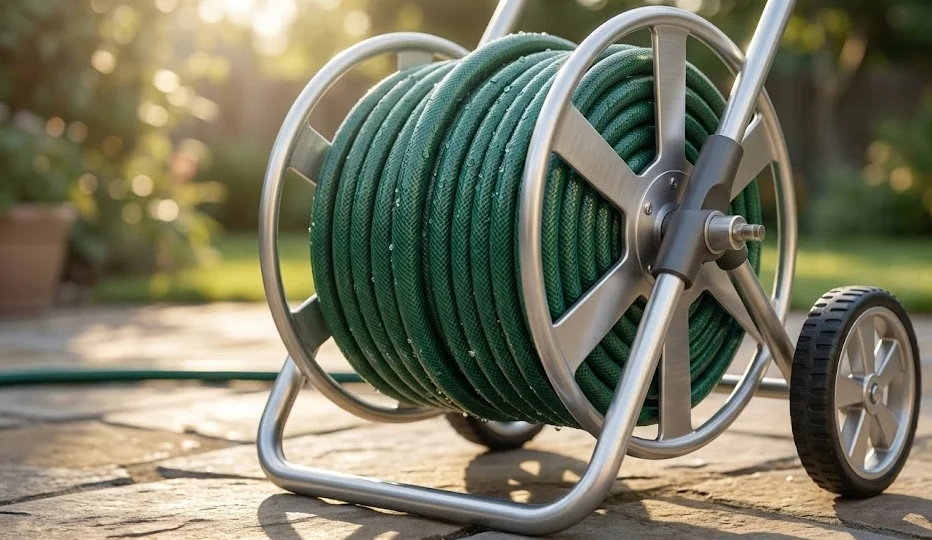
Storage is where many hoses, including some anti-kink hose models, get ruined. Coiling them into small, tight loops or tossing them into a tangled pile encourages sharp bends. A better approach is to use a storage solution that maintains large, even loops. A water pipe 25 meters and storage cart or a large water pipe storage cart keeps your hose organised, protected, and ready to deploy without instant kinks. Drain as much water as possible before storage to reduce weight and internal pressure.
How to Choose the Best Anti-Kink Hose for Your Garden
Choosing the right anti-kink hose is about more than just grabbing the first “kink resistant” label you see. Different materials, reinforcements, and lengths behave very differently in real-world use. Start by thinking about how and where you use your hose most often: a small patio with pots has different needs than a long driveway or a wide lawn.
For general home use, many gardeners do well with a reinforced PVC or hybrid anti-kink hose. These are flexible enough to move easily but rigid enough to resist collapsing. If you frequently drag the hose over rough concrete or use it for car washing as well as gardening, a fiber-reinforced model such as a PVC garden hose fiber hose gardening car wash hose offers extra strength. In colder or more variable climates, pairing an anti-kink hose with an environmentally friendly and cold resistant garden hose design can provide both flexibility and freeze resistance.
For heavier-duty tasks, including powering high-pressure spray guns or handling hot water, consider a more industrial-grade option. A 5 foot heavy duty rubber PVC garden hose or a high temperature resistant industrial grade 500PSI rubber NBR water hose combines anti-kink characteristics with excellent pressure and temperature tolerance. Although these hoses are heavier, their thick walls and reinforced structure hold their shape under demanding conditions.
Core Materials for an Anti-Kink Hose
Core materials are at the heart of anti-kink hose performance. Standard PVC is affordable but often stiff and prone to permanent bends. In contrast, a high-elastic PVC anti-kink hose is formulated to bend without collapsing and to spring back toward its original shape after a twist. TPE blends offer even more flexibility and elasticity, which can make them feel softer in the hand while still resisting sharp folds.
Rubber and rubber–PVC hybrids are favored where durability is the top priority. These materials help an anti-kink hose survive rough surfaces, vehicle traffic, and repeated pressure cycles. The trade-off is weight, as these hoses are denser. For many gardeners, a hybrid approach—PVC or TPE exterior with fiber reinforcement—provides a sweet spot between kink resistance, weight, and cost.
Key Design Features of a Quality Anti-Kink Hose
Beyond materials, several design choices separate a true anti-kink hose from a standard one. Internal braiding or mesh layers give the hose backbone, preventing the internal tube from collapsing when bent. Look for hoses that tout “fiber reinforced” or “multi-layer” construction. Smooth inner walls also help maintain flow and reduce friction losses.
Fittings matter as well. Solid brass or well-machined alloy connectors resist crushing, cross-threading, and leaks better than thin, molded plastic ends. Some anti-kink hose models add swivel connectors near the faucet end so the hose can rotate freely instead of twisting as you walk. Combined with a good storage method, these details help keep the hose straight and functional season after season.
Matching Anti-Kink Hose Length to Your Space
Length has a big influence on how any anti-kink hose behaves. Very long hoses can feel heavy and unwieldy, increasing the chance of loops and minor tangles. On the other hand, a hose that is too short forces you to pull at sharp angles or use multiple connectors, both of which can create new kink points.
Measure from your spigot to the farthest point you need to reach, then add a small safety margin. If you need to cover very different zones, it can be smarter to use two shorter anti-kink hoses with quick connectors than one extra-long line. This approach also allows you to pair each anti-kink hose with its own reel or rack, keeping your storage tidy.
Related Products
Here are some related hoses and accessories that pair well with an anti-kink hose setup.
1. How often should I replace a regular hose if I don’t upgrade to an anti-kink hose?
Most standard garden hoses last anywhere from three to five years under regular use, but kink-prone models may fail sooner if they are stored poorly or frequently dragged over rough surfaces. If you see multiple leaks, bulges, or hardened sections, it is usually more cost-effective to upgrade to an anti-kink hose instead of constantly repairing the old one.
2. Will an anti-kink hose completely eliminate all kinks?
No hose can guarantee zero kinks in every situation, but a well-designed anti-kink hose dramatically reduces how often they happen. Combined with good storage on a reel or rack and careful routing around sharp corners, many users find that kinks go from a daily frustration to a rare inconvenience.
3. Can I use an anti-kink hose with high-pressure spray guns or sprinklers?
Yes, many anti-kink hose models are specifically reinforced to handle higher pressures needed for spray guns and sprinklers. Just check the rated working pressure before pairing it with pressure-intensive tools. For more demanding applications, a reinforced rubber or rubber–PVC hybrid anti-kink hose provides extra safety margin.
4. How do I store my anti-kink hose during winter?
Before winter, shut off the water, disconnect the hose, and drain as much water as possible. Coil it in large, gentle loops on a reel or rack and store it in a cool, dry place away from direct sunlight and freezing temperatures. This prevents internal ice damage and helps your anti-kink hose stay flexible for the next season.
If gardening is a regular part of your routine, steady water pressure matters. A strong, consistent supply makes it easier to water well and helps plants grow the way they should. When a garden hose runs with low pressure, watering becomes slow and uneven. That can leave some areas too dry and make results disappointing. […]
High-Pressure vs. Low-Pressure: Picking Your Power When sourcing or manufacturing a Car wash spray gun, the first variable we analyze is the power source. There is a massive engineering difference between a tool designed for a municipal water tap and one built for an industrial pressure pump. As a factory-direct supplier, we see buyers frequently confuse […]
We use cookies to enhance your browsing experience, serve personalised ads or content, and analyse our traffic. By clicking "Accept All", you consent to our use of cookies.