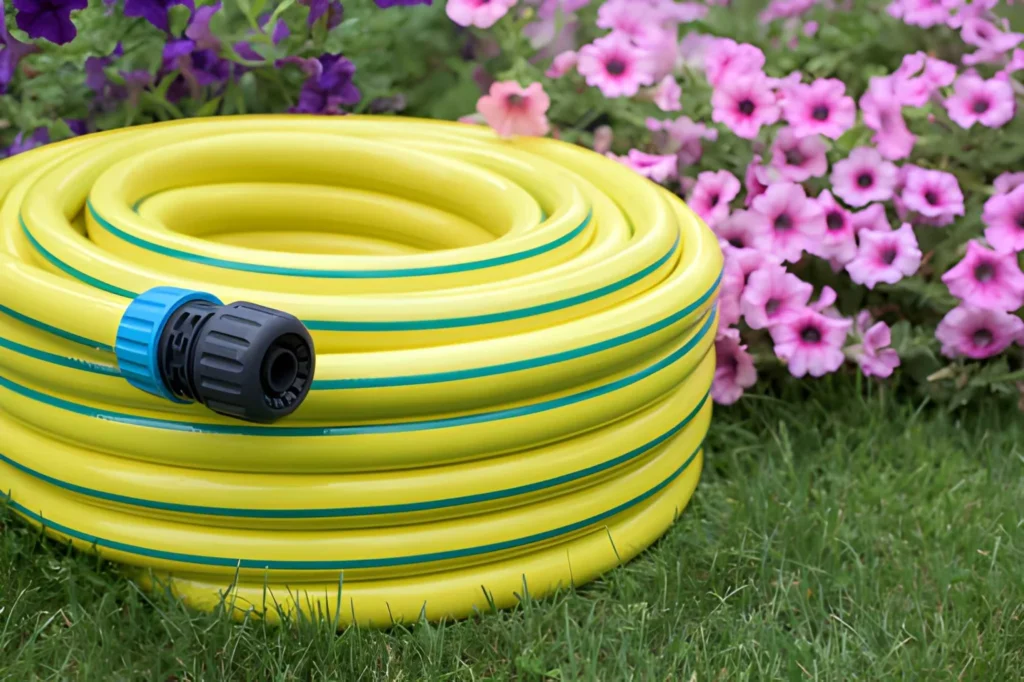
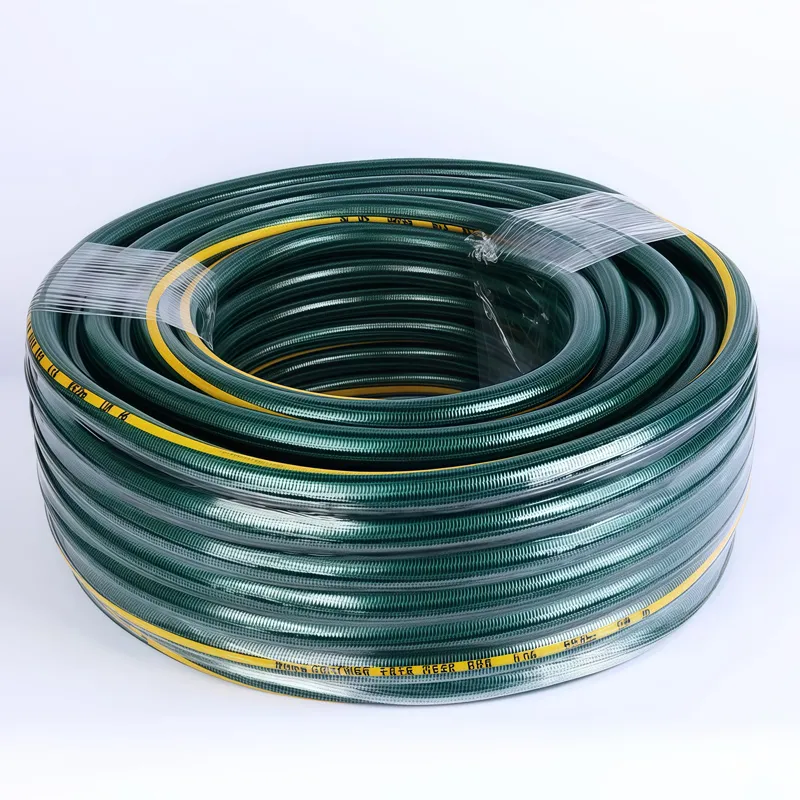
Choosing the right garden hose material is one of those decisions that seems small at first but has a huge impact on how easy your watering tasks feel over the next few years. PVC, rubber, and TPE each behave differently in terms of flexibility, weight, durability, and safety, which means the “best” garden hose material depends heavily on how and where you use your hose. If you want to compare real products while reading, you can look at options like a PVC-based PVC Garden Hose Fiber Hose Gardening Car Wash Hose, a rubber-reinforced 5 Foot Heavy Duty Rubber PVC Garden Hose, or modern blends like the Yellow Tpe Water Hose Soft Grip Ideal For Home Car Wash Garden.
This guide breaks down how each garden hose material performs in real-world use, so you can match PVC, rubber, or TPE hoses to lawns, car washing, commercial jobs, and more. By the end, you will know exactly which garden hose material fits your climate, water pressure, and budget.
Understanding Garden Hose Material Basics
Before comparing specific types, it helps to define what is actually meant by garden hose material. In most cases, the base material of the hose refers to the main inner and outer layers that hold water and protect against abrasion and UV light. Reinforcement layers, such as braided fibers or extra PVC spirals, are added around that core, but the base material—PVC, rubber, or TPE—still largely determines how the hose feels and behaves.
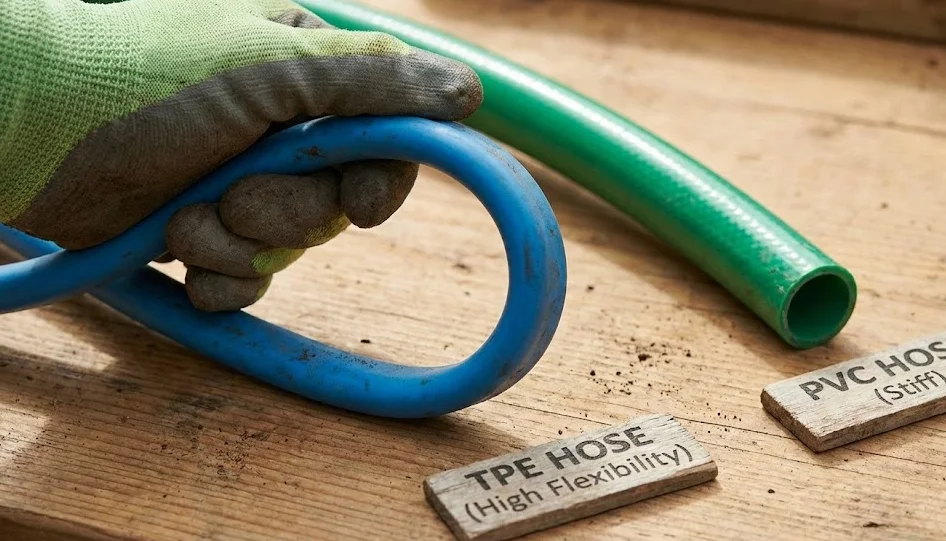
PVC (polyvinyl chloride) is the classic plastic garden hose material: light, relatively stiff when cold, and very affordable. Rubber is a more traditional industrial material: heavier, highly flexible, and extremely durable, even under high pressure or rough use. TPE (thermoplastic elastomer) is a newer, hybrid garden hose material designed to combine rubber-like flexibility with plastic-style lightness, and it often shines in anti-kink and cold-weather performance.
Because each garden hose material handles temperature, pressure, and bending differently, choosing between PVC, rubber, and TPE is really about balancing comfort, lifespan, and price. The sections below walk through each option in detail.
PVC Garden Hose Material: Lightweight and Budget-Friendly
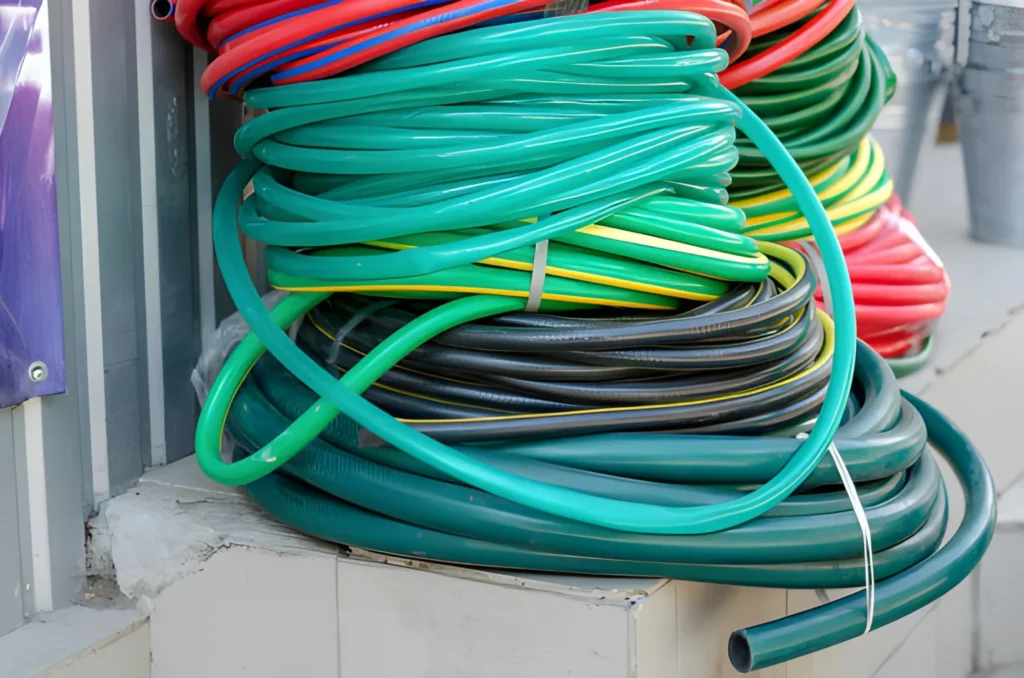
PVC is the most common garden hose material found in big box stores and online because it offers a strong balance of low cost and acceptable performance. PVC garden hoses are lightweight, easy to carry, and typically come in bright colors that make them easy to spot on the lawn. If you mostly do light watering around a small yard or patio, PVC garden hose material may cover your needs without overspending.
PVC as a garden hose material is also highly versatile in terms of wall thickness and reinforcement. Entry-level hoses may use plain PVC walls, while better models incorporate fiber or mesh reinforcement to increase pressure resistance and reduce kinking. Many specialized hoses for antifreeze performance and odor control also start with PVC as the base material, then add extra layers or special compounds.
Product highlight (PVC garden hose material): For a durable yet manageable PVC option, consider the PVC Garden Hose Fiber Hose Gardening Car Wash Hose, which uses reinforcing fibers to improve strength while keeping weight low.
When PVC Garden Hose Material Is a Good Fit
PVC garden hose material is ideal when you:
Want a low-cost first hose for a new home or small garden.
Prefer a hose that is light enough to carry easily around the yard or hang on a wall rack.
Mainly use moderate water pressure for typical watering and car rinsing.
If you store the hose properly on a reel and avoid leaving it under harsh sun all day, a reinforced PVC garden hose material product can deliver years of everyday service without major issues.
When to Avoid PVC Garden Hose Material
On the other hand, PVC garden hose material is not the best choice when:
You live in a very cold climate where hoses must stay flexible below freezing.
You regularly use hot water or connect to high-pressure pumps.
You drag the hose across rough concrete, gravel, or job sites daily.
Under these conditions, PVC garden hose material can become stiff, crack over time, or develop leaks at stress points. You may still keep a PVC hose for light-duty tasks, but upgrading to rubber or TPE makes more sense for demanding use.
Rubber Garden Hose Material: Heavy-Duty and Long-Lasting
Rubber has long been the go-to garden hose material for professional landscapers, contractors, and serious DIY users. A rubber garden hose typically feels heavier and more solid than PVC, but it also resists abrasion, UV damage, and temperature extremes much better. Rubber garden hose material can handle both hot and cold water, making it a great fit for year-round use and high-demand tasks.
Another key advantage of rubber as a garden hose material is its flexibility under pressure. Even when thickly reinforced, rubber hose walls tend to bend smoothly instead of forming tight kinks. This is especially valuable when dragging hoses around corners, over curbs, or across rough terrain.
High-pressure applications, such as pressure washers, commercial watering, or long hose runs.
Work environments with rough surfaces, frequent dragging, and potential impact.
Situations where hot water or high ambient temperatures are common.
Because rubber garden hose material remains flexible in cold weather, it is also a smart choice in climates with seasonal freezes, as long as you still drain and store it properly to prevent internal ice damage.
Downsides of Rubber Garden Hose Material
No garden hose material is perfect, and rubber’s main drawbacks are weight and cost. Rubber hoses are:
Heavier, which can be tiring for users with limited strength or mobility.
More expensive upfront than basic PVC garden hose material.
Sometimes prone to leaving black marks if dragged across light-colored surfaces.
If you only water a balcony garden or small courtyard, the added durability of rubber garden hose material may not justify the extra weight and price. But for power users, that investment usually pays off in a longer, more reliable service life.
TPE Garden Hose Material: Flexible, Modern, and Anti-Kink
TPE (thermoplastic elastomer) is a newer garden hose material that aims to capture the best of both worlds: the flexibility and softness of rubber with the light weight and color variety of plastics. A TPE garden hose often feels soft and grippy in the hand, coils easily even in cool weather, and strongly resists permanent kinks.
As a garden hose material, TPE is especially popular in premium “anti-kink” and “soft grip” hoses marketed to homeowners who want maximum convenience. The material’s elastic behavior allows it to stretch and compress slightly under stress, then bounce back without forming sharp bends that restrict water flow.
TPE garden hose material offers several stand-out benefits:
Excellent flexibility, even in cooler temperatures, making coiling and uncoiling easier.
Strong inherent kink resistance, which means fewer frustrating stops in water flow.
Softer feel and better grip compared to stiffer PVC garden hose material.
Often lighter than full-rubber hose constructions, reducing user fatigue.
These traits make TPE an appealing garden hose material for households that value comfort, ease of use, and neat storage on wall racks or hose reels.
Limitations of TPE Garden Hose Material
There are a few trade-offs to consider with TPE garden hose material:
Cost often sits between PVC and rubber, sometimes closer to rubber for premium models.
Not all TPE blends are created equal; cheaper versions may not withstand very high pressure or harsh chemicals as well as top-tier rubber.
Availability may be more limited in some regions compared with traditional PVC garden hose material.
For most home users, however, TPE garden hose material is an excellent “middle path” that delivers many of rubber’s benefits without all of the weight.
How to Choose the Best Garden Hose Material for Your Needs
With PVC, rubber, and TPE all competing for attention, the right garden hose material for you depends on a few key questions:
Daily use or commercial work favors rubber or quality TPE.
What kind of tasks will you do?
Simple patio and flower bed watering can be handled by PVC or TPE.
High-pressure washing or long-distance runs benefit from rubber garden hose material or reinforced hybrids.
What is your climate like?
Hot, sunny areas can cause low-grade PVC garden hose material to harden and crack over time.
Cold climates reward TPE and rubber for staying flexible.
How important are comfort and weight?
If carrying and storing the hose is challenging, a lighter TPE or reinforced PVC garden hose material hose may be better than heavy rubber.
What is your budget?
PVC remains the cheapest garden hose material option.
Rubber and TPE cost more upfront but can provide better long-term value through durability and ease of use.
By answering these questions honestly, you can narrow your garden hose material choice quickly. Many households even keep two hoses: a lighter PVC or TPE hose for quick tasks, and a heavier rubber-based hose for demanding jobs.
Related Products and External Resources
Internal product suggestions (for different garden hose material needs)
Q1: Which garden hose material lasts the longest overall? In heavy, daily use, rubber garden hose material typically offers the longest service life because it resists abrasion, UV damage, and high pressures very well. Premium TPE garden hose material can come close, especially in home settings where kinking and cold-weather flexibility are major concerns.
Q2: Is PVC garden hose material safe for drinking water? Standard PVC garden hose material is usually not designed for potable water and may contain plasticizers that can leach into standing water. If you need to supply drinking water to RVs, boats, or pets, look for hoses specifically labeled as drinking-water-safe rather than relying on generic PVC garden hose material.
Q3: Does TPE garden hose material kink less than PVC and rubber? In most designs, yes. TPE garden hose material is engineered to bend and flex more smoothly than stiff PVC and often includes anti-kink construction. Rubber hoses also resist kinks well, but they are heavier. For many homeowners, TPE is the easiest garden hose material to coil and uncoil without constant tangles.
Q4: Can I use hot water with any garden hose material? Not all garden hose material handles hot water equally. Many basic PVC hoses are rated only for cold or lukewarm water and can soften or deform under heat. Rubber garden hose material and some high-grade TPE hoses are better choices when you routinely use warm or hot water, but always check the manufacturer’s temperature rating.
Q5: What is the best garden hose material for small urban balconies or patios? For compact spaces where hoses are frequently coiled and stored on hooks or reels, a lightweight TPE or reinforced PVC garden hose material usually makes the most sense. These hoses are easier to move and store than heavy rubber while still offering good performance for typical balcony plants and cleaning tasks.
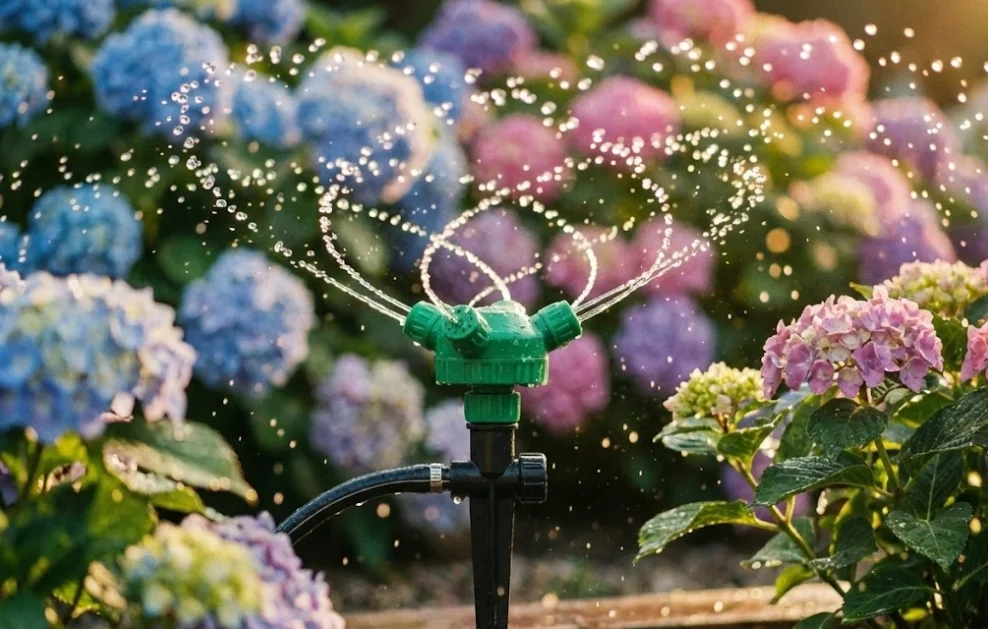
Table of Contents Achieving a lush, green garden without wasting water or spending hours with a hose is a goal for every gardener, and the secret often lies in the hardware you choose. A multi hole water rotating nozzle is a transformative tool designed to bridge the gap between simple hand-watering and expensive underground systems. […]
When it comes to outdoor activities, particularly gardening, having the right tools can make all the difference. One tool that often gets overlooked but is absolutely essential is the PVC Water Hose . You may not realize it, but the quality and durability of your water hose can significantly impact the ease and efficiency of […]
We use cookies to enhance your browsing experience, serve personalised ads or content, and analyse our traffic. By clicking "Accept All", you consent to our use of cookies.