Watering is a key part of lawn care. When done correctly, it promotes deep roots, helps prevent disease, and keeps grass lush. So, how long should watering last? Here’s a clear guide to help you establish the right routine for your lawn.
Finding the Right Balance in Lawn Watering
Watering your lawn properly supports its health and looks. Excessive watering encourages shallow roots and disease, while insufficient watering makes turf dry and brown. Achieving the right balance is crucial for overall lawn health.
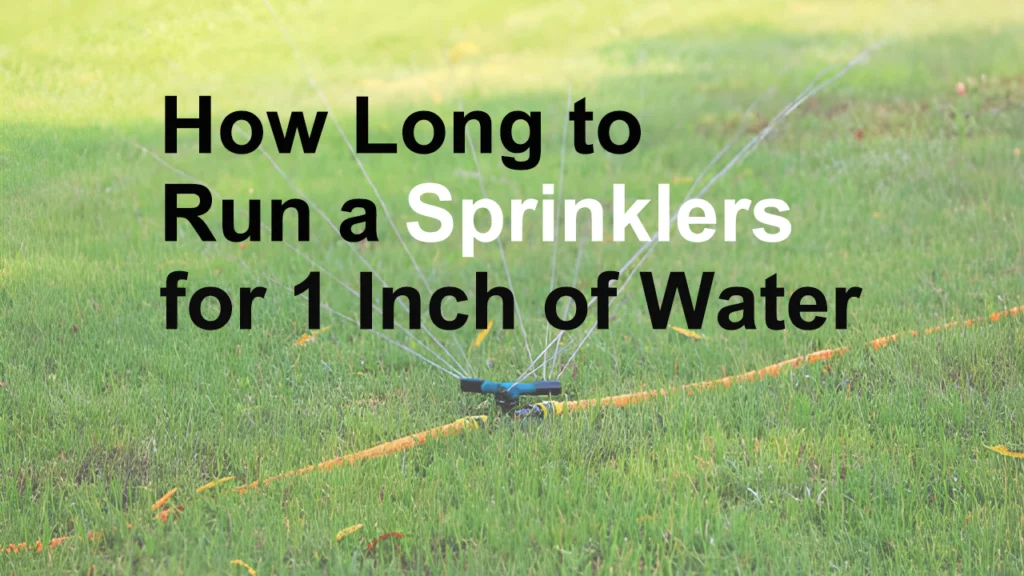
How Long to Run Sprinklers for 1 Inch of Water
Determining the right watering duration depends on your sprinkler system, its delivery rate, and your lawn’s needs. Most lawns require about 1 inch of water per week, including rainfall, which generally translates to 1–2 hours of sprinkler use weekly, depending on your setup. By considering these factors, you can customize a watering schedule that fits your lawn.
Factors That Determine Watering Duration
The irrigation system type, delivery rate, soil type, and local weather all influence how long you should water your lawn.
Understanding Your Irrigation System
Spray Sprinklers
Spray sprinklers are popular because they spread water evenly over a defined area. Description: They use a fixed spray pattern to cover a set space uniformly. Water delivery rate: typically about 1/2 inch per hour. Approximate running time: to deliver roughly 1 inch of water per week, run spray sprinklers for about 2 hours total weekly, ideally in three bursts of 20 minutes each during early mornings.
Rotor or MP Rotor Heads
Rotor sprinklers and MP rotor heads suit larger areas and offer more controlled watering. Description: They rotate, sending a stream of water across the area in a sweeping motion. Water delivery rate: around 1 inch per hour. Approximate running time: for 1 inch of water per week, run these sprinklers for about 1 hour weekly, split into two 30-minute sessions in early mornings.
Drip Irrigation Systems
Drip systems are highly efficient, delivering water straight to the soil and minimizing evaporation. Description: Emitters slowly release water near plant bases. Water delivery rate: varies with emitter type and spacing. Approximate running time: to reach 1 inch of water per week, calculate time based on the emitters’ flow rate; this often means several hours spread across the week, preferably in the early morning.
Understanding Watering Duration
Why delivery rate matters
Knowing your irrigation system’s water delivery rate helps set accurate watering times. This ensures the lawn gets enough moisture without wasteful overwatering and can lower water bills over time.
How to measure delivery rate
Catch cup test: Place several catch cups around the lawn, run the sprinklers for a fixed period, and measure the collected water to calculate the delivery rate. Manufacturer specifications: Check the sprinkler or drip system specs to find the stated delivery rate.
Additional Considerations
Adjusting Watering Duration Based on Weather Conditions
A lawn’s water needs shift with the weather. In hot, dry spells, water more deeply and less often to promote deeper roots, rather than increasing frequency with shallow watering. In cooler, wet periods, reduce the total amount of water.
Accounting for Slope and Soil Type
Slope and soil type (sandy, loamy, or clay) influence water absorption. Sloped areas may require shorter, more frequent sessions to prevent runoff, while clay soils need slower, deeper watering to avoid waterlogging.
Monitoring for Signs of Over- or Under-Watering
Regularly inspect the lawn for signs of overwatering (soggy soil, fungal growth) and underwatering (dry, brown patches). Use these observations to adjust the schedule and maintain a healthy lawn.
How Long Should You Water Your Grass?
Most lawns need about 1 inch of water per week, including rainfall. This usually translates to roughly 1–2 hours of irrigation weekly, depending on the system and its delivery rate.
For example, spray sprinklers typically require about 2 hours per week, ideally split into three 20-minute sessions. Rotor sprinklers may need about 1 hour per week, divided into two 30-minute sessions.
In hot, dry spells, water more deeply and less often to promote deeper roots, instead of watering more frequently with shallow coverage.
Efficient Watering Made Easy
Learn practical durations per head type and how to adjust for weather.
The Anatomy of a Professional Spray Gun Ever wonder why some hose attachments last a decade while others crack after one season? It all comes down to what’s under the hood. As an OEM spray gun manufacturer, we know that a reliable tool is more than just a trigger and a nozzle; it is a carefully […]
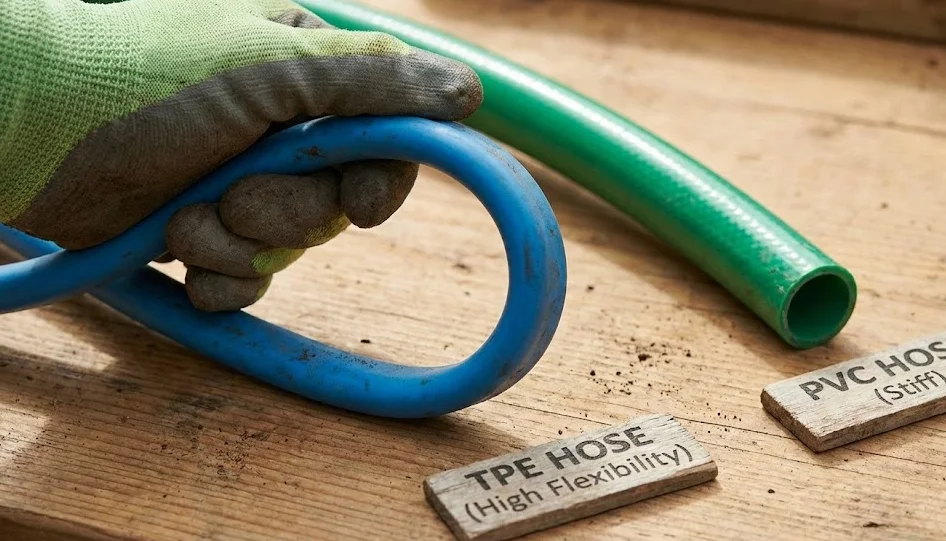
Table of Contents Choosing the right garden hose material is one of those decisions that seems small at first but has a huge impact on how easy your watering tasks feel over the next few years. PVC, rubber, and TPE each behave differently in terms of flexibility, weight, durability, and safety, which means the “best” […]
We use cookies to enhance your browsing experience, serve personalised ads or content, and analyse our traffic. By clicking "Accept All", you consent to our use of cookies.