The Anatomy of a Durable Garden Hose Nozzle: Materials Matter
We have all seen nozzles crack, leak, or shatter after a single season of use. As a manufacturer, I can tell you that longevity isn’t luck; it is engineering. The difference between a throwaway tool and a professional garden hose nozzle lies entirely in the raw materials we select before the molds even heat up. We build tools to withstand the realities of landscaping and industrial work, focusing on structural integrity from the inside out.
Core Construction: Plastic vs. Metal
When designing for industrial-grade irrigation, the internal skeleton is critical.
ABS Plastic: Lightweight and cost-effective. It works for light residential watering but often fails under high pressure or impact.
Zinc Alloy & Brass: This is the standard for a heavy-duty metal construction. A zinc alloy body provides the tensile strength needed to handle high PSI without splitting. Unlike plastic, metal threads and cores resist cross-threading and can survive repeated drops onto concrete driveways. This transforms a standard sprayer into an impact-resistant nozzle capable of surviving job site abuse.
Sealing Technology: The Science of a Leak-Proof Design
A nozzle is only as good as its seal. Standard rubber washers often dry out, crack, and shrink under UV exposure, leading to the dreaded “wrist shower.”
The NBR Advantage: We upgrade internal seals to NBR (Nitrile Butadiene Rubber). NBR offers superior resistance to oils, chemicals, and extreme temperature fluctuations compared to standard rubber.
Result: This ensures a true leak-proof design that maintains pressure integrity season after season, rather than failing at the first sign of wear.
External Coating: TPR for Grip and Protection
The outer shell serves two purposes: user comfort and shock armor. We coat our high-performance spray guns in TPR (Thermoplastic Rubber).
Shock Absorption: Unlike rigid plastic shells that shatter, TPR absorbs the energy from impacts, protecting the internal valve mechanisms.
Control: This material creates an anti-slip rubber grip. Whether your hands are wet, muddy, or gloved, the soft-touch coating ensures you maintain precise control over the flow without hand fatigue.
Mechanism and Control: Ergonomics for Long-Term Use
When we engineer a garden hose nozzle, the focus isn’t just on water projection; it is about how the tool feels in your hand after thirty minutes of use. User-centric design is critical for preventing fatigue, especially for professional landscapers and dedicated gardeners. We prioritize “smarter mechanisms” that reduce the grip force required to operate the tool while maintaining high pressure.
Trigger Styles Analyzed: Rear vs. Front Triggers
The placement of the trigger drastically changes the user experience. We offer both styles to suit different market preferences:
Rear Triggers: The traditional design where the lever is behind the handle. These are intuitive and generally easier to manufacture, making them cost-effective. However, they can cause hand strain during extended use if the internal spring tension is too high.
Front Triggers: These mimic a pistol grip, allowing the user to pull with their fingers rather than squeezing with the palm. This design often provides better leverage and control, making it a preferred choice for heavy-duty metal construction models intended for frequent use.
Thumb Control: The Modern Standard
For maximum comfort, ergonomic thumb control has become the industry standard. By replacing the squeeze trigger with a top-mounted lever, we eliminate the need for constant grip pressure. This design allows users to turn the water on or off and adjust the flow rate control with a simple flick of the thumb. It is an essential feature for customers with weaker grip strength or arthritis, and it significantly reduces the mechanical complexity of the handle, leading to fewer potential failure points.
Flow Control Valves: Engineering Behind Smooth Adjustment
The internal valve is the heart of the nozzle. Cheap plastic valves often seize up or leak over time. We utilize precision-machined components to ensure smooth operation. A high-quality valve allows for seamless transitions from a light trickle to full power without dripping. To get the most out of these precision valves, pairing the nozzle with a consistent water source is key; for instance, understanding why choosing the right PVC water hose is essential ensures that your high-performance nozzle isn’t bottlenecked by a low-quality hose. Our leak-proof design relies on tight tolerances in these valves to withstand varying water pressures without compromising the seal.
Spray Patterns: Versatility Meets Precision
When we design a professional garden hose nozzle, the utility lies in how effectively it manages water flow for different tasks. It isn’t just about getting water from point A to point B; it is about delivering the right pressure and shape for the specific application. A high-quality industrial-grade irrigation tool replaces the need for multiple attachments by integrating adjustable spray patterns directly into the head.
Decoding the Patterns: Mist, Soaker, Jet, and Flat Uses
For global importers and retailers, understanding the practical application of these settings helps in marketing the versatility of the tool. We engineer specific geometries into the faceplate to ensure distinct flow types:
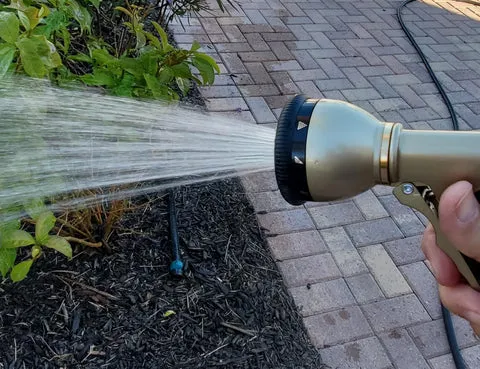
Mist: Creates a fine cloud of water. This is critical for delicate seedlings or orchids where heavy droplets would damage the plant structure.
Soaker: Allows water to flow gently, mimicking a slow rain. This is ideal for deep root watering without displacing soil or exposing roots.
Jet: Concentrates the stream into a high-pressure point. This turns the garden hose attachment into a cleaning tool for washing cars, driveways, or muddy boots.
Flat: Spreads the water in a wide horizontal line. This is the most efficient pattern for rinsing soap off vehicles or watering a row of hedges evenly.
The Internal Disc: Dial Durability and Pattern Bleeding Prevention
The difference between a premium spray nozzle for garden hose and a budget alternative often comes down to the internal rotating disc. We use impact-resistant nozzle components to ensure the dial clicks firmly into place.
If the internal machining is poor, you get “pattern bleeding”—where water leaks from the Jet hole while you are trying to use the Mist setting. To prevent this, we utilize high-tolerance seals behind the faceplate. This ensures that when a user selects a pattern, the water is channeled exclusively through that specific port, maintaining pressure and precision. A crisp, tactile “click” indicates that the internal gasket has aligned perfectly, sealing off the other ports to prevent cross-flow.
Why Nozzles Fail: A Manufacturer’s Insight
As an ISO9001-certified manufacturer, we analyze thousands of units to understand exactly where generic tools go wrong. Failure rarely happens by accident; it is usually the result of cost-cutting in critical areas like material density and internal engineering.
Thread Wear and Leaks
The most common complaint we see is water spraying from the connection point rather than the spray face. This typically happens when manufacturers rely on soft, molded plastic threads instead of precision machined threads. Soft plastic deforms easily, leading to cross-threading when attaching the tool to a spigot. Once those threads are stripped, the leak-proof design is compromised. We prioritize high-strength materials at these connection points to ensure a secure, long-term fit with any standard garden hose attachment.
Frost Damage and Weather Resistance
Standard plastics become brittle when temperatures drop. If water is left inside the chamber, it expands as it freezes, cracking the body of the tool. To combat this, we utilize cold-proof materials and heavy-duty polymers capable of withstanding significant temperature fluctuations. Our gray rubber coated high-pressure car wash water gun is built with these environmental stressors in mind, featuring a protective layer that insulates the core components against thermal shock.
Spring Fatigue
The internal mechanism is the heart of any trigger-operated tool. Many budget options use low-grade steel springs that rust or lose tension after a single season, resulting in a handle that sticks or fails to shut off water flow.
Rust Prevention: We use corrosion-resistant alloys to handle constant water exposure.
Tension Retention: High-cycle testing ensures the trigger returns to the off position every time.
Debris Protection: Proper sealing prevents grit from entering the mechanism and causing internal jamming.
Investing in an impact-resistant nozzle with industrial-grade irrigation internals eliminates the frustration of frequent replacements.
Choosing the Right Garden Hose Nozzle for the Application
For the Home Gardener: Lightweight Efficiency
For residential users, fatigue reduction is the priority. A heavy tool becomes a burden during daily watering sessions. We recommend high-grade polymer or hybrid nozzles that offer durability without the weight of solid metal. These tools pair perfectly with a lightweight anti-kink garden hose to ensure smooth maneuverability around delicate flower beds and patio furniture. The focus here is on ergonomic grips and gentle spray patterns like mist or shower, which protect soil structure while keeping the user comfortable.
For Industrial Use: Heavy-Duty Metal Construction
Commercial environments, such as car wash stations or municipal landscaping, demand industrial-grade irrigation tools. Here, heavy-duty metal construction—often using zinc alloy or brass—is non-negotiable. These tools must withstand drops on concrete and handle significantly higher water pressure without leaking. A robust car wash watering nozzle with copper components provides the necessary impact-resistant nozzle body and high PSI tolerance required for rigorous cleaning tasks where standard plastic alternatives would fail.
The OEM/ODM Factor: Customizing for Your Market
As a factory-direct manufacturer, we understand that regional needs vary significantly. Our OEM garden tools service allows importers and brands to tailor specifications to their specific market segments.
Climate Adaptation: Upgrading internal seals and materials to be “cold-proof” for markets with harsh winters.
Brand Identity: Customizing colorways, private labeling, and packaging to stand out on retail shelves.
Feature Sets: Modifying flow rates or locking mechanisms based on specific user feedback.
We don’t just supply a product; we engineer a solution that fits the specific demands of your local customer base.
Maintenance Tips for Longevity
Even the most robust industrial-grade tools require basic care to maintain peak performance. As manufacturers, we design our garden hose nozzle products for durability, but following a few simple maintenance steps ensures they last for years rather than just a season.
Winterizing: Prevent Internal Ice Expansion
Cold weather is the biggest enemy of watering equipment. While we use cold-resistant materials, trapped water that freezes inside the nozzle will expand and can crack even a heavy-duty metal body.
Drain Completely: Always disconnect the nozzle from the hose and shake out excess water before the first frost.
Indoor Storage: Store your spray guns in a dry, frost-free area like a garage or shed.
Check Valves: Ensure flow control valves are left open to allow air circulation.
For a deeper dive into keeping your entire watering system running smoothly, check our guide on clean garden hose maintenance.
Washer Replacement: Simple Fixes for Leaks
A drip at the connection point rarely means the tool is broken; it usually indicates a worn washer. The rubber O-ring at the garden hose attachment creates the seal, and over time, it can dry out or flatten.
Inspect Regularly: Check the washer inside the threaded connector for cracks or stiffness.
Swap It Out: Replacing an old washer with a fresh one instantly restores the leak-proof design.
Avoid Overtightening: Cranking the nozzle too tight onto the hose can crush the washer, causing leaks rather than preventing them.
Cleaning Mineral Deposits
If you live in an area with hard water, calcium and lime buildup can clog the spray face, disrupting the pattern and reducing pressure. Keeping the spray holes clear is essential for maintaining the efficiency of your water conservation tools.
Vinegar Soak: Submerge the nozzle head in white vinegar for 30 minutes to dissolve mineral deposits.
Soft Brush: Use a toothbrush to gently scrub the spray face and clear any stubborn debris.
Lubricate: Periodically apply a small amount of silicone lubricant to the precision machined threads and quick-connect points to prevent corrosion and ensure smooth operation.
Frequently Asked Questions About Garden Hose Nozzles
What is the most durable material for a garden hose nozzle?
For maximum longevity, a heavy-duty metal construction featuring zinc alloy or brass is the superior choice. While plastic nozzles are lightweight and affordable, they often crack under high pressure or if dropped on concrete. As a manufacturer, we recommend looking for a zinc alloy body coated with TPR (thermoplastic rubber). This combination offers the impact resistance of metal with an anti-slip rubber grip that protects the tool and your hands. If you need a tool that survives seasons of hard use, metal internals are non-negotiable.
How do I stop my hose nozzle from leaking?
Leaks typically occur at the connection point between the hose and the spray gun. The most common culprit is a worn-out or missing rubber washer. Simply replacing this inexpensive seal usually fixes the issue. Additionally, ensure the precision machined threads are clean and not cross-threaded when attaching the nozzle. Investing in a leak-proof design that utilizes high-quality NBR O-rings rather than standard rubber gaskets can prevent these issues from the start. For more detailed troubleshooting on setups, check our ultimate guide to water hose with nozzle configurations.
Is a thumb control nozzle better than a trigger nozzle?
For many users, yes. An ergonomic thumb control system allows you to adjust the flow with a simple push of your thumb, maintaining a constant spray without needing to squeeze a handle continuously. This significantly reduces hand fatigue, making it ideal for users with arthritis or for long watering sessions. However, traditional rear-trigger high-pressure spray gun models are still popular for quick, intermittent bursts of water, such as when washing a car.
What is the difference between residential and industrial spray guns?
The main differences lie in pressure tolerance and material composition. Industrial-grade irrigation tools are engineered to withstand higher PSI (often up to 500 PSI) and rough handling on job sites. They prioritize flow rate and impact resistance. Residential models focus on versatility, offering multiple adjustable spray patterns for delicate gardening tasks. If you are looking for top-tier durability for home use, our breakdown of the best garden hose nozzle of 2026 highlights models that bridge the gap between professional performance and residential comfort.
🚀 Upgrade Your Watering Game with the best garden hose nozzle! Tired of nozzles that leak, are hard to use, or confusing? A good garden hose nozzle can make watering easier—saving you time, water, and hassle. After testing 38 nozzles, some over 6 months of daily use, we’ve picked the top 8 nozzles to fit all […]
Detecting a leak in a garden hose is typically straightforward, particularly when water discharge is directed toward the operator. Rather than discarding the garden hose, consider that a basic, low-cost repair can often restore its operational integrity. Small Leaks Section For repairing a minor puncture or leak in a garden hose, utilize electrical tape, duct tape, or […]
We use cookies to enhance your browsing experience, serve personalised ads or content, and analyse our traffic. By clicking "Accept All", you consent to our use of cookies.